.jpeg)

11/19/2025, Smif n Wessun, Dah Shinin
This week’s feature is Dah Shinin. Coincidences and connections – I’d call it this week’s theme, but I feel like a broken record. Anyone addicted to musical due diligence can relate. Whether it be the old-school vinyl collectors with encyclopedic knowledge of session musicians, the hip-hop heads of the 90s and 2000s who can name all the features on the 15th single by their 20th favorite rapper or the new-age streamers with far-reaching awareness of artists who’ve yet to see the radio, there is a category of listener who alienated themselves through excessive knowledge that’s only useful in exclusive conversations. If you’ve seen two enthusiastic music fans hijack a conversation, leaving the rest of the group to sit and listen, you should know what I mean. Fear not, we’re just here to spread game.
Does Smif-n-Wessun ring a bell? They fired with a bang from the Brooklyn hip-hop revolver in hip-hops first decade of dominance. Their debut, Dah Shinin, resulted in a direct hit on the charts – 5 on the Hip-Hop Top 100 and 57 on the Billboard. Their joint career had been on the rise in the underground since the start of the 90s, sending warning shots with collab albums and posse features, but by 1995, they were done hiding. As a result, within a year of their triumphant introduction, Smif-n-Wessun received a cease-and-desist from that darn arms company.
If Smith & Wesson had taste and a little creative vision, they might’ve instead considered a sponsorship. Dah Shinin is an establishment of their version of Brooklyn and the gun-totin’ quick bidness S&W supplies. With echoes of Tribe Called Quest in the jazz-style rhythms drums provide the hop and walking bass provides the hop. They stay steady in their themes and bring in every possible influence to create dynamic rich music – an approach they detail in this interview with HIPHOPDX. They hear reggae in hip-hop and aim to reverse engineer that influence by leaning into reggae-style riddims, even performing in patois. The rastafied tracks on the record provide more bounce that blends and contrasts with the smooth shuffle and shake of the NYC jazz-hop. My favorite part: the cover art inspired by the late Roy Ayers' He's Coming.
Tek and Steele regrouped under the name Cocoa Brovaz in 1998, and reclaimed their name for a few releases this century – the most intriguing being Monumental (’11) – but following that suit, they were bound to the nebulous category of musical misfits known as the underground. Just another reminder of what you can find with just a bit of digging.
Enjoy!

11/4/2025, Suthukazi Arosi, The Best Of
This week’s feature is The Best Of Suthukazi Arosi. Let this be a reminder to listen to the radio. This Sunday, as I drove across Detroit’s westside in search of something I already had, I made my favorite kind of discovery. In FM, with no static at all, Suthukazi Arosi’s voice leapt into the car. What a feeling it was to be lifted by her for the first time. I’ve been savoring that feeling all week long now and uplifted I’ve remained.
It was the legendary Ismael Ahmed who, in a rare burst of consecutively cohesive tracks, put me onto Arosi’s original “Africa Unite.” She drives home a simple and familiar message for the duration of this later-career showstopper, atop sharp electronic instrumentation. Her voice is full, nimble, and powerful, her range is modestly displayed but evidenced with ease, and her vibrato is as sparse and as it is refined. The sonic production is excellent, filling the track with increasing density, and the addition of vocal effects down the stretch that take the track to another level. I rushed straight to Spotify, (yes while driving, it was that urgent) and searched for a full record to thoroughly unpack. To my disappointment there were just two, her sophomore album Ubuntu (’01) and this compilation record. Typical.
I’ve learned by now, however, to take what you can get. I jumped into her only available studio album, which was conceived 3 years prior to the track I fell in love with. What happened next? I fell deeper in love.
I know it was love because I was confused as hell. For reasons I couldn’t initially articulate, Ubuntu’s lead track transported me to The British Isles. Large string sections fill the sonic atmosphere across the record behind classic afrobeats. But stringed instruments are no stranger to African music, particularly in the unavoidably-euro-influenced Zulu tradition Arosi hails from. So why did certain tracks (1, 3, 7 & 9) so distinctly resemble the hearty lurching of inspired folk music? After all, the melodic sway of stacked chordophones is nothing new, often they’re a key ingredient of African polyrhythms. It took me two days to decipher that my Irish bell was being rung instead by coordinated contributions from a wailing organ. Organist Thuthukani Cele’s accompaniment to Arosi’s typical melodic components results in an even more nuanced sound.
Who was this artist I’d discovered? How could I learn more? As I daydreamed about someday interviewing Suthukazi while browsing musical databases, seeking to better understand both her sonic and social identity, I made an unpleasantly related discovery. She passed this February. Like so many artists before, she lived, learned, fought and created before returning to the soil too soon. Too soon for myself, at least. This week’s feature is The Best Of, not because Ubuntu isn’t great, but because the compilation offers the maximum summary of Arosi’s illusive body of work. From the strong majority of her 2001 release, to tunes from the unavailable The Journey (’04) that offer sharpened sonic quality and piano accompaniment in place of space-filling stringed melodies, tradition and modernity collide for a cohesive contrast, quality is guaranteed. Front to back. I hope this terrific combo track-list fills you with the same spirit it gave to me.
Enjoy!

10/21/2025, Brandee Younger, Gadabout Season
This week’s feature is Gadabout Season. We have deemed expansion necessary, to new heights, new depths, new mediums, greater variety, and widened horizons. The relationship between demand and results, however, can be trepidatious. (Now switching out of the royal collective) I have been in the lab for you all, ruminating on an expanded product and the potential of a community attached to such a product. For now, you are that community. You are also the face of that torturous monster called Pressure. It’s a monster of my own creation, constructed from the expectations I imagine you all might have for me. Under Pressure is where I’ve done my best work, but his weight is tremendous, difficult to carry. This most recent phase of expansion has forced me to recon with my inability to lug him any further, examine the ethics of projecting my own lofty expectations onto you the reader, and grapple with the fact that pressure may not equate to progress. Pressure makes diamonds. But, is frozen crystal my desired form, or does my path require malleability? Maybe it’s not a push I need after all, but a pull. To run towards something is much different than away. Watching your goals come into view is a sounder reward than watching worries fade slowly into the rearview. The fact is, they can always catch up, present new reasons to move forward. Knowing that, there’s no point in dwelling on their presence, no matter how near, because you may miss something on the path in front of you.
As I scanned my path a few months back, I stumbled upon two music courses to complete my journalism-filled collegiate schedule. Yes I’ve been in the lab, the music lab, and it’s just what the doctor ordered. With just a bit more knowledge, optimism, and moxy than I had yesterday, I bring you my review of Brandee Younger’s 2025 LP, Gadabout Season.

10/14/2025, Steve Miller Band, Fly Like An Eagle
This week’s feature is Fly Like An Eagle. Are you surprised to see Steve Miller this week? Not as much as me. Steve Miller had a talented crew, and “Fly Like An Eagle” is one of them ones. But aren’t they one of those bands whose catalogue you dip and skip through, known for the hits, better seen live? ’73, ’77, ’82…
No, as it turns out, Miller’s band began marching from San Francisco in the late 60s, and the menagerie rock outfit made its most impactful stop in 1976. Men of a certain era, Miller and co. were a product of the Midwestern invasion of California. The loosey goosey folksy swagger that caught the attention of the Bay Area audience took root on the national stage in the form of the Space Cowboy, and once the shtick stuck it was time to get comfortable. Fly Like An Eagle is a crowned jewel of American rock with just enough roll. The title track fittingly follows “Space Intro” with a sonically advanced realization of the psychedelia the band billed early on, adjusted to a groovy 70s pop radio pace. This supersonic lounge music was a far cry from the jangling blues they championed on their first 3 records, aside from the token track 6. Even the straight psychedelic tracks like “Wild Mountain Honey” or “The Window” feel warmer, sharper, clearer, and shined up for the big stage. On top of the headliner, the mid-record pairing of “Take The Money And Run” and “Rock’n Me” vaulted SMB into stride with the Eagles at the forefront of everyman pop-rock, a genre whose 20-year-run was fully taking root.
Cohesion was not always a strength of Miller’s group, but there was no lack of musical talent. It was a combination of the refined harmonies, clean instrumentals, and the feeling of their feet on the top of the charts that allowed for this slew of hits. The always-underrated guitar of Steve Miller stays within itself record-wide, easing off the sharper electric tuning he featured on The Joker (73), while subtly painting the midsection of nearly every track. He knew what he was doing. Steve Miller - the secret music nerd - didn’t forget to have his share of fun at work, and balancing the slew of influences and range of aesthetics within his grasp on this record must’ve been his favorite part.
Enjoy!

10/1/2025, Aretha Franklin, Young, Gifted and Black
This week’s feature is Young, Gifted and Black. I went to bed last night in search of some healing. The sun decided 5 hours of sleep was sufficient, so with 6 hours until my 11:30 class, I began daydreaming… In 1972, the patron saint of Detroit soul devised a soundtrack for just the occasion. A certified soul soother, Aretha Franklin was no stranger to a need for healing. Now 20 years into her career, she was no stranger to the studio game either. More than a decade prior, Aretha was nudged out of her native gospel into the easy vocal jazz of the era on a journey to chart-topping hits in the wake of Motown pioneers. Now, Franklin was a soul superstar looking to push the limits of the genre and incorporate her musical roots. She’d earned Atlantic’s trust with a slew of hits, and with her newfound musical flexibility Aretha delivered the most loose and rangy record of her career. The vocal powerhouse seems to command the accompaniment for the length of the record, as if they’re playing to catch up with her, doing everything they can to ensure she’s not alone in her sonic stratosphere. No, that’s not how that works. No, Aretha didn’t care. She came to perform, and perform she did, delivering one legendary performance after another with this assumption: ‘they can’t be far behind’. She was right. “Day Dreaming” and “Rock Steady” represent two of the few occasions across 50 years of music where Aretha’s vocal performance was matched by the band behind her. Could it have had something to do with Chuck Rainey, Cornell Dupree, The Memphis Horns, the Franklin sisters, Donny Hathaway, and Dr. John? I think so. And as if that musical entourage wasn’t sufficient, Franklin called in some favors. She covered and claimed Nina Simone’s “Young Gifted and Black,” gave a restrained nod to Otis Redding with “I’ve Been Loving You Too Long,” and made use of some talented British songwriters of the era – Elton John, Paul McCartney, and John Lennon. You may wonder, what’s Aretha doing with a ridiculous crew like that on Monday in 1972? The answer is simple: healing. Let this record wash over you. Invite her flawless emotional portrayals to hit home. Allow her to uplift you, bring you down, then lift you even higher. Aretha Franklin was once young, permanently gifted and Black, an angel amongst us, and even as she resides in the Paradise she so often channeled, she remains the finest antidote for us weary souls.
Enjoy!
.jpg)
9/24/2025, They Say I'm Different, Betty Davis
This week’s feature is They Say I’m Different. Make way for hurricane Betty. At the age of 16, Betty Mabry home in Homestead, PA to enroll in the Fashion Institute of Technology in New York City’s Greenwich Village. She got right to work, exploring the art, fashion, and music scenes – the nightlife - that willfully ignored the social and racial divisions of the mid-1960s. There, the young model began her career-long trend of running into the right folks (the most talented and influential forces in modern music). Quickly becoming the hottest commodity in one of the world’s hottest scenes, it wasn’t long before Jimi Hendrix, Sly Stone, Hugh Masekela, and eventually Miles Davis were swept into her storm. Betty was described by many as talented, tireless, sensual, confident, and creative, but I think one word best summarizes her spirit: intoxicating. No stranger to such allure, it’s no wonder Miles made her ‘Ms. Davis’ in 1968.
Betty’s contributions to Miles’ career go beyond dropping the first ‘B’ into “Bitches Brew;” the funk rock and psychedelia in which Betty was well-versed inspired Miles to expand his bag of influences and led to some of his most interesting later-career releases (all that in just one short year of flawlessly tranquil marriage). Betty Davis was just as much of an influence on those around her as they were on her, and remember we’re talking elite company – Santana, Herbie Hancock, Larry Graham, and the Pointer Sisters to name a few more.
Officially the coolest woman in the world following a year or two of post-divorce international self-exploration, Davis released her self-titled debut in 1973. Unlike Grace Jones who took a very similar step into music four years later, Betty had back-ing. Betty Davis (73) featured a strong NYC jazz/blues crew, Larry Johnson became a major player at bass for Betty, founding member of Sly and the Family Stone, Greg Errico sat in on drums, and oh yeah, Miles Davis oversaw musical direction. Not bad, but my favorite dose of Davis funk came the following year. They Say I’m Different has even more firepower than its predecessor, but with a different Davis at the helm. Miles would say Betty was too wild for him, but she may also have been too smart. This time, she got herself a crop of background vocalists that boosted the ceiling of her already wall-less vocal range (something her once-husband wouldn’t have considered), and added a gargantuan percussion posse that featured Buddy Miles, who also played some led guitar, and Pete Escovado, head of the Escovado clan that gave us Sheila E and a slew of studio beasts. Allow me to direct your ears to 0:01 of track 1. The thumping bass immediately takes me to a different place. The accompaniment, comprised of a guitar or two, sharp drums, and an electric keyboard, feels fresh to this day, reflecting just how cutting-edge Betty’s sound was. “Shoo-B-Doop And Cop Him” is a crown jewel of Davis’ catalogue. It establishes the content and musical tone for the rest of the record, while providing a perfect introduction to her attitude and unrivaled persona. Betty Davis was a free woman of bombastic talent. If she wanted you, she’d cop you.
Enjoy!

9/17/2025, Funkentelechy Vs. The Placebo Syndrome, Parliament
This week’s feature is Funkentelechy Vs. The Placebo Syndrome. Let’s begin with some functional truths of life. The low 70s are the most neutral temperature to the human senses, tariffs on foreign imports raise domestic prices, and George Clinton is a genius. At the dawn of the 1970s, Clinton launched his iconic funk-rock ensemble, Funkadelic. They gained notoriety by pouncing on the creative freedom and increasingly blurred lines of the era and defining a subsect of hefty bands (take Blood Sweat & Tears or Mandrill) that pushed the limits of abstracted pseudo rock over the course of the decade. Funkadelic roamed the same territory as Sly and The Family Stone – bridging the ethnocultural gap that was enforced by the radio, never the artists themselves. Yes, George Clinton was building a bridge. The frequently featured electric guitars and psychedelia of Funkadelic helped captivate the prime post-acoustic experimental rock audience, luring unsuspecting fans into the fledgling jaws of funk. That was phase 1. Phase 2 began in 1974 when Clinton and company transformed from a damn good band into a bonafide supergroup with the additions of Bernie Worrel, Bootsy Collins, Maceo Parker, Fred Wesley, and other members of the James Brown soulsphere. Parliament, a name which Clinton had been sitting on for some time, became the moniker for the greatest funk band ever assembled. Their next three records house some of the decade’s best musical moments amidst the joyous pursuit of otherworldly funk. Parliament wanted connection via music, to spread community through grooves, and they wanted to do it from outer space. The good news? They were doing it. The bad news? It didn’t take long for Earthlings to get to work misunderstanding and falsely reproducing The Funk. In 1977, Funkentelechy (of the P-Funk chronicles) touched down to set the record straight. He leads with one simple question: “where’d you get that funk from?” Clinton got his funk from the bones of blues, doo-wop, and soul before mixing it with psychedelia, and producing a perfect sound. Funkentelechy Vs. The Placebo Syndrome is an improvisational, high-energy, instrumentally-focused display of pure funk, meant to stand firmly in the face of the musically-shallow impressionist hits that were becoming commonplace on the radio (and became standard the next decade). Armed with a “Flashlight” and “Bop Gun,” Starchild simultaneously outlines the mindset and sound of funk in celebration of the genre he helped father and as an expose on the ‘pop music placebo’ – the illusion of good energy and good music that stood to subliminally whitewash America’s newest bombastically Black cultural movement via radio waves. “Mood control!” The P-Funk army weren’t the only ones to take on disco, but by exposing the chart’s “pimping of the pleasure principle” and soaring above the lowered musical expectations of the average fan, they delivered one of Music’s most decisive victories over its unwelcome, impure influences – the “Voidoffunk”. They did so with a full roster - the Brides of Funkenstein, The Horny Horns, Bootsy, Bernie, Dj Lollipop – the works, and that stacked cast shines through every second of the flawless record. The communal synastry and musical talent necessary to turn a “Three Blind Mice” inspired refrain into a 10-minute song can only be found in The Funk. No placebo could compare. This chronic case of hard-working wit, vivacious voices, bright brass, and body-filling bass can only be found in one place.
Enjoy!

9/10/2025, Man's Best Friend, Sabrina Carpenter
Sabrina Carpenter is the closest thing American pop music has to a real-life Powerpuff Girl. When most kids are still learning to tie their shoes at the age of 15 (or was that just me?) Carpenter was priming herself for a rise to fame. Her natural mix of sugar, spice, and espresso soon came into contact with the infamous Chemical X (Disney channel), and out burst the perfect pop star, a flawless celebrity figure. As far as I can tell, and Man’s Best Friend only made me more certain, there’s very little that makes Carpenter’s music special, aside from Carpenter herself. What I mean is this: her tendency towards generic pop-of-the-moment places her performative persona at the center of attention – and what a persona it is.
Carpenter fits the Swift-formed mold perfectly, but where the two Pennsylvanian Antonoff collaborators differ is their perceivable attitudes ‘in love’. While Taylor Swift believers are often criticized for living in a feminist fantasy land of their mother’s making, Carpenter airs on the side of comedically exasperated realism. Swift has always brought an uplifting, rebellious, independent attitude to her music, even when the subject matter isn’t pleasant. Carpenter does some of those things, but contrasts with the industry titan in what I call her resignation to the bullshit. “Gave me his whole heart, then I gave him (noggin),” is a telling lyric to me. I doubt I’m the first and unfortunately, I won’t be the last to break this news: the average American male (but not just males) doesn’t digest and regurgitate their emotions in a fashion that is conducive to the relationship’s need for empathetic discourse, and the resulting dumping of pent-up emotion can clutter the Love Train’s tracks. Resignation to that, expecting nothing more from an entire gender of the world’s apex species, is a bit disappointing in my mind.
Sabrina Carpenter’s 2025 release is the typically mixed bag major pop labels have standardized over the last 20 years (bring back Brittney). I found her songwriting effective, the album’s narrative easy to follow, and the instrumentals largely underwhelming. I believe that Carpenter makes music to be performed live – it shows in her lyrical designs, the number of verses meant for speak-singing. She is a pop star. She is the product. She knows what she’s doing.
But does she know what she’s doing?
When Sabrina Carpenter showcases sonically bland music before the masses, does she consider that it will be her persona and way of being that is idolized? If Carpenter wanted to sound like ABBA, to pass along one of her beloved influences, she could. She passes along a character. Perfectly acceptable, she’s not the only one, and she’s not near the worst. But what does this character preach? I’ve danced around the edge of enough sensitive subjects; I’m glad to have saved this simple point to close my argument. If it hasn’t already occurred to you, glance at the album cover and think about what that name means. Sabrina Carpenter won’t be stained by a suggestive album cover, and its nothing in the piles of pseudo-smut the music industry has to offer. Years from now it’ll likely be the felicitous cover of the Bonus Track Edition people click most often. But legacy doesn’t fade. Sabrina Carpenter has control of hers, an opportunity so many women have gone without. With her chance, Betty Davis chose to be a “Nasty Gal,” Chaka Khan chose to be Every Woman, Brittney Spears chose to be “Toxic.” I hope Ms. Carpenter’s final choice is not to be a Man’s Best Friend.

8/27/2025, The Songstress, Anita Baker
This week’s feature is The Songstress. The internet is forever, right? My counterpoint can be summed up in one word: litigation. Allow me the pleasure of familiarizing you with Anita Baker. The 4’11 powerhouse rose to prominence in the 80s, after harnessing her voice and gaining her musical footing in - you should already know - Detroit, MI. If the soon-to-be global superstar had been fortunate enough to sign with Motown, which had moved to LA by then, she’d have avoided a career of that cursed word, litigation. After getting stiffed on royalties from her smash-hit debut, The Songstress, Baker entered a years long battle with labels that, on top of distracting from what should have been a Mariah Carey-like career (in terms of consistency, longevity, and moolah), left her with very little support – things like album anniversaries and greatest hits collections - selling sustained copies of her records post their initial waves of success. She’s been taken care of financially (missing money made sure of that), but her underrepresentation has continued into the digital age. Without proper industry backing through the transition from vinyl to CDs, to digital formats, and eventually the monster that is modern streaming, Baker’s music has gotten increasingly scarce. If you look on Spotify right now, you may be surprised at the absence of this week’s feature, or any non-2005 Christmas albums on Anita Baker’s page. She’s not the only one. Whether it be those who’ve fallen through the cracks, victims of labels like Baker, or those who’ve withheld their music over fiscal or philosophical disagreements, artists’ absence from streaming platforms is already more common than you’d think. You know what else is? Litigation. Consider that the ‘platforms’ we entrust to safeguard our favorite songs may not be so stable. Then reflect on the idea of your favorite artist’s work going missing one day. Done? Next, I highly recommend you go to a record store and purchase Anita Baker’s perfectly named, timeless (but not timelessly available) debut The Songstress. For $1-20 (if you’re legit), you could own a collection of some of the greatest solo soul performances of all time. Baker navigates each track with eeeease, and blows a couple clear out of the water. A noted contender of Whitney, Baker could soar with the best of them, but with an Aretha-like tendency towards her chest voice, which is proudly on display for 42 minutes of the very best sickly 80s soul had to offer. Get your copy.
Enjoy!

Musiq Soulchild, Juslisen, 8/20/2025
This week’s feature is Juslisen. Let me introduce you to last generation’s Donny Hathaway. Who is the man who’s been around since the dawn of the century, whose ironclad, soul-lineage-based sound is still serving him well, who’s got 13 Grammy nominations to show for it spanning through 2018, who’s remained largely underrated with just one BET award under his HOF-quality belt? Talkin bout Musiq Soulchild. ‘Watchu know about Musiq Soulchild?!’ – a question I’ve been asked more than once. I know he’s a Muslim-raised man from Philadelphia PA, with a name that flawlessly reflects the nature of his relentlessly focused artistic pursuit. My comparison to Donny Hathaway lies foremost in that characteristic. He’s not the only artist to emulate the Windy City great, fellow Chicagoan R Kelly had a similarly inspired drive, but the Hathaway and Isley-borrowed riffing Kells often employed was much more surface-level. Musiq Soulchild represents a rebirth of Hathaway as an artist: a solo male singer who leans heavily on gone-but-not-forgotten eras of music to palatize and customize the sound of his contemporary scene. Hathaway drew heavily from gospel (specifically the brand of Church music that fostered the birth of Southern inspired Midwestern soul in parishes in Detroit and Chicago) to curate the brand of soul he sat comfortably in during studio work. Both employed tried-and-true instrumentals, Hathaway with full bands and Soulchild with the loungey instrumentals hip-hop we call neo-soul, that allowed both performers to balance their influences with generationally solid performative chops. On Juslisen, Musiq Soulchild is in complete command of the formula above. He puts his head down, attaches to his sprawling, organic beats, hears the music surrounding him, and grooves. His performances employ quick soul-inspired progressions, just a few bars at a time, like a boxer throwing jab after jab. This allows him to smoothly navigate verses, covering as much ground in his lyrics as he wishes, taking the performance in whatever direction he pleases while leaning on catchy hooks and choruses that he enters and exits with remarkable ease. Juslisen, much like his own name, is an explanation. You’re invited to simply kick back and listen to what he has to say while his music makes that a welcome task. Then every few tracks, he drops a straight JAM. A musiqal uppercut if you will. Reach the album’s final combo and it’ll knock you out.
Enjoy!

Slum Village, Fan-Tas-Tic, Vol. 2, 8/13/2025
This week’s feature is Fan-Tas-Tic, Vol. 2. The endless pockets of perfect music scattered across annals of hip-hop never cease to amaze me. Often due to a special connection or synergy, these matches made in heaven have provided us with some of America’s greatest music – whether it be the hometown happenstance that brought together Pharell and Clipse, the family ties running through Griselda, the unmatchable chemistry and shared vision of Joey Badass and the late Capital Steez, N.W.A., WUTANG, Outkast, The Roots, you get the idea. Across all of music, it’s been proven easier to soar with talented like-minded artists by one’s side. Likewise, creation can become more difficult in the absence of that symbiotic company. In hip-hop especially, musical support systems can be very temporary. The reason perhaps for the number of “pockets” of great hip-hop, rather than “bushels,” “troves,” or something even more substantial, is that the average solo performers have much less influence over the sound of their record than an artist holding a guitar for instance. Rappers, particularly those without production skills themselves, are at the mercy of their circumstances – factors like what label they sign with determine who they can work with, and therefore how their music will sound. Now lemme reach in my back pocket. Ever heard of Slum Village? In 1998 nobody had. Despite their possessing the greatest hip-hop producer of all time, J Dilla, the radio-ready group had yet to pick up serious steam. That changed that year when they hitched a ride on the sonically like-minded Tribe Called Quest tour. It wouldn’t be long before J Dilla departed to pursue what should’ve been one of hip-hop’s most impactful careers, and the talented Baatin’s losing effort in a lifelong battle with himself cost him his spot in the group in quick succession. But for a moment, sometime between 1998 and 2000, the stars looming over Slum Village were perfectly aligned, and the Fan-Tas-Tic series was born. Vol. 2 is my choice this week because of its elevated cleanliness-via experience gained, the litany of high-quality features secured following their quality debut, and for the simple reminder that these pockets are just a sacred as they are brief.
Enjoy!

Kristianna, Too Late To Be Sorry, 8/6/2025
Per request: You ask, we deliver. This week’s feature is Too Late To Be Sorry by Kristianna. This prompt r&b/pop breakup record hits all the standard notes of a contemporary romantic self-explorative album - GIVEON’s latest effort is a good reference. She introes and outros with voicemail recordings, a trope, but a perfectly logical one. Then “Blacked Out” sets the tone for the record both thematically and sonically. Not only do we get to hear Kristianna’s point of view and voice as a writer - something I paid attention to considering the faux-real attitude towards the story behind the music - we also get our first taste of the sound she brought to the table. For the length of the recording, Kristianna delivers her constantly flowing performances over spacey trap-style production. With electronic-heavy records like this, the pressure on production creativity, complexity, and cleanliness goes up. Generally, these instrumentals were on the thin side. Pushing the lo-fi atmospherics to near Sahbabii levels, Kristianna put a lot of emphasis on her performances, which needed to fill the sonic space. She stepped up to the task of filling the gaps, certainly, but stretched herself thin on the longer runs like “Blacked Out” or “Now You’re Sad.” With better support from production, Kristianna showed a clear understanding of writing to performance, working within tracks and trying to elevate them when possible, which is more easily executable with strong musical backing that holds the audience’s attention. “Poor Connection” and “2 Can Play” are the album’s best songs. The first features bass more prominently than any prior tracks, and after a well-executed voicemail recording bridge, it delves into the most ambitious production layering of the record. The result: her most intriguing listen as Kristianna details her side of the relationship’s withering communication. “2 Can Play” marks one of the records several well-communicated tone-switches. As she recalls her personal side-antics at the end of ‘their’ time together, the attitude shifts away from loss, into acceptance, and towards freedom over the records heaviest bass – a solid r&b track. Kristianna had pieces, and while her final sound may still be a few pieces away, the issues are identifiable, fixable, and limited in number. The intention and vision of the record felt executed to the fullest, and the lyrics gave a more-than-decent view into the head of the speaker. Support the artist and see for yourself.
Enjoy!

Beastie Boys, The Mix-Up, 1/1/2007
Now to discuss a white American classic: the Beastie Boys. Long-respected in the Caucasian community and tolerated by music fans of all races and creeds, there’s no question which town produced this merry band of hip-hop musicians. Only from New York City could such a musically-legit gimmick-group arise. Praised for their smashing together of rock and rap, the Beastie Boys' formula failed to impress me much past the age of 7 (plus “No Sleep Til Brooklyn” implies the ownership of a car in NYC, a lifestyle choice I disagree with hailing from the overdriven Motor City). In summary, my relationship with the Beastie Boys is riddled with small dilemmas, namely: are these guys properly enveloped in, understanding, and reverent of the genre they’ve chosen to occupy? Do they need to be? It was always hard for me to tell – hard to decipher intention through the zany shouting. Luckily, I rediscovered an album recently that eased my concern. The Mix-Up was a fixture of my dad’s kid-friendly musical offerings. Its orange slice-design CD often sat atop Vampire Weekend’s debut near the stereo for easy-Ian-access, but that classic childhood combo soon faded in the rearview as I delved headlong into what felt like an endless library of music on the family computer. Now I’ve arrived at a moment where I can look back with thanks on my many musical detours and distractions alike, as I’ve once again circled back just in time to form a new opinion. The Mix-Up not only evidences the firm command the Beastie Boys possessed within their genre(s) of choice, but an original musical vision I can appreciate, given the decade's-worth of standardly inferior visions I’ve consumed since my first fling with this record. The Beasties are not the copy-cats I once thought they were, at least they weren’t in 2007. This bonafide hip-hop instrumental album has the range, flow, and perceived improvisation of a perfectly rounded band. While I can’t so much speak to the influence of this later-model release, it’s undoubtedly a champion example of ‘making music in the middle’ that sheds unignorable light on the path they paved for other pale-skinned hip-hop fence-sitters from Kid Rock to Yelawolf (and all the good artists in between). And they did it all without uttering a word.
Enjoy!

Let God Sort Em Out, Clipse, 7/23/2025
Before I share the upshot, let’s talk about the Fall-off.
The gist is this: at some point, every rapper hits a wall, loses the juice. After years in a game that demands killer instinct and inter-industrial connections, there comes a time when artists can no longer create in the rat-race-space that is hip hop.
Did you listen to Music To Be Murdered By (20)? That was a falloff.
Did you listen to Donda (21)? That was a falloff.
Did you listen to Tha Carter VI? That was a falloff.
Pusha T is 48 years old. That’s older than Eminem, Kanye, and Wheezy at the time of their respective Fall-offs, which only makes more impressive the fact that rap’s champion of old-school weight-moving is only getting stronger. Upon entering what would be a tricky period in the average rap career, Pusha T has released 3 consecutive catalog-topping records, and this time it's a family affair.
For a long time, Clipse felt like a part of hip-hop history, a part of that time I just barely missed, a dynamic connection I never quite got to experience. Eclipses are a powerful rarity of nature: an otherworldly cycle beyond our control brings into alignment two massive looming figures in our sky, turning out our lights and placing the world on pause. It's been 15 years since the last Clipse, and the moment VA’s finest realigned, my world went on pause.
I had small but reasonable concerns about the brothers’ chemistry, considering the 15 years that passed and the changes they’ve undergone. It seemed Clipse no longer had their collective focus, dope dealing, but in a satisfying show of maturity and a will to succeed, they found common ground.

Flowers, Durand Jones & The Indications, 7/16/2025
Durand Jones & The Indications are a staple in contemporary soul, and Flowers is exactly as good as it should be.
Along with Thee Sacred Souls, Durand Jones & The Indications are leading a small-but-steady wave of old-school soul that began rolling at the end of last decade. Composed of the excellent dual vocalists Durand Jones and Aaron Frazier, plus the band they formed in college, The Indications have certainty in their musical identity, given their control over its development and a keen awareness of their collective comfort zone. That doesn’t guarantee a successful project though - the next step is always the trickiest. Their last effort, Private Space (21), is proof of that. Feeling the need to branch out stylistically, more prominently feature Aaron Frazier, and cover a variety of other bases, The Indications produced a solid record, but not their most cohesive effort. Since then, Durand Jones got a load of personal material out on Wait Til I Get Over (23), and Aaron Frazier released his second solo project last year. The healthy relationship they’ve curated as co-creatives is richly evident in the band’s re-amped fusion this time around. The lyrical efforts have returned to the focused strength that they were on the group’s freshman and sophomore LPs. The stylistic disposition is unwavering. The performers are comfortable. Durand Jones & The Indications are thriving.
Enjoy!

The Campfire Headphase, Boards of Canada, 7/9/2025
The Campfire Headphase, the third of the three seminal albums released by the legendary electronic duo Boards of Canada, seems to be the most overlooked of the trifecta. It is easy to see why - the previous two albums, Music has the Right to Children and Geogaddi, are some of the most iconic albums in trip-hop and electronic history. The Campfire Headphase is a departure from that iconic, flowing, esoteric, haunting, and sample-heavy structure. Instead, it opts for acoustic guitars and more linear song structure. Still, it works. “Chromakey Dreamcoat,” the album’s second track, showcases this formula. A distorted acoustic guitar plays over a growing drum beat as atmospheric synth sounds fill the back. Even with the slew of percussive shifts, it feels structured with a clear intro, bridge, climax, and ending. This more linear, traditional approach to song making offers Boards of Canada the opportunity to create more hypnotic songs with cinematic effect. As a song like “Satellite Anthem Icarus” or “Constants are Changing” plays, I can only sit, think, and soak in the moment. It isn’t chaotic or eerie. Instead, “Dayvan Cowboy,” the album’s magnum opus, leans on this new structure through its truly epic build-up and climax. A distorted guitar riff paves the way in tandem with a subtle cymbal clap. The track’s intro gives way to the climax as atmospheric noise and a simple, reverbed guitar powerfully lead the track into a beautiful string section played over a sound drum beat. The song’s structure perfectly captures the feeling of rising past reality, past humanity, and the climax leaves the listener in a moment of newfound clarity. Boards of Canada ventured into new territory with all the strings and structure, and it completely worked. The Campfire Headphase isn’t a demonic acid trip like Geogaddi or as much of a nostalgic high as Music Has the Right to Children. Instead, it creates a retrospective, contemplative, and cinematic experience unlike anything else I’ve ever heard. The Campfire Headphase hypnotized me in a whole new way, and it deserves more praise.
By: Connor London

Nightclubbing, Grace Jones, 7/2/2025
This week’s feature is Nightclubbing. Taste. Never let it be said The Culture Gyre doesn’t have it. Too often people speak without it. If you find yourself trying to determine whether or not someone is in possession of taste, we recommend one surefire strategy: bring up Grace Jones. One of the greatest multitalented artists of the last century, Jones erupted from Jamaica and inserted herself into the World’s most throbbing cultural hubs. She tore through the modeling scene with her stunning, immediately-iconic appearance, first in Paris then New York. It was in the latter that her music career began to take form in the disco club scene of the late 70s. Her early musical products perfectly suited the clubs they were inspired by while establishing her persona in a new genre. That early work was largely centered around her status as a performative figure, with the music itself playing a supportive role – the influence of these stylistic tropes is endlessly apparent in contemporary drag culture. Important, essential, but not her best. In 1980, Grace Jones started digging deeper with Warm Leatherette, and in 1981, she struck gold. The edition of Sly and Robbie, the dynamic Jamaican rhythm duo, was the final piece of the puzzle. The heavy-duty Jamaican bounce Jones had been missing, fused with her fashion-disco and the new wave she began to incorporate the year prior, made for a flawless sound. When Nightclubbing, Grace Jones could do no wrong. If the sturdy Detroit disco/funk that Amp Fidler churned out for years were likened to a George Foreman grill, “Pull Up To The Bumper” would be a flame thrower, and those aren’t the only toes Jones’ high heels tread across. She effortlessly flipped Bill Withers’ “Use Me” to a reggae bop, emulated Sade on “I’ve Done It Again”, and expanded the atmosphere of Iggy Pop (& Bowie)’s “Nightclubbing” to the fringe of psychedelia, revolutionizing the already classic track and ushering in a new decade of music. Even with the truckload of high-quality cultural influences, Grace Jones’ originality cuts through the noise - “Art Groupie” being the shining example. There are no holes, but if the 80s studio-cleansed sound isn’t your cup of tea, the 2014 Bonus Edition includes more raw instrumental tracks that accentuate the musicians’ Jamaican roots. Both editions are perfect 10s.
Enjoy!

MTV Unplugged No. 2.0, Lauryn Hill, 6/25/2025
This week’s feature is MTV Unplugged No. 2.0. I’m lucky to have received a hot tip. What does everyone know about Lauryn Hill? She recorded one of the best hip hop albums ever and then, for one reason or another, fizzled to never fully function as a professional recording artist again. What did I not know? She has an MTV Unplugged treasure trove of acoustic, mostly original, unheard songs. The problem with Lauryn Hill is that the prophet-like persona she cultivated on The Miseducation of Lauryn Hill is directly contradicted by her “off-the-field issues.” Someone solved that problem (and a few others) for me. MTV Unplugged No. 2.0 is a window directly into the missing link between Lauryn Hill’s music and publicized behavior: her mind. On July 21, 2001, Ms. Lauryn Hill took the stage exactly as she was, with a scratchy voice and too much on her mind, to record the rawest live album I’ve ever heard. Guarded as ever, Hill navigates the performance at her own pace, speaking directly to the crowd frequently and about only the most intense, challenging subjects. The subject matter, which she’d worn thin in her restlessly exhausted mind, would likely sound alien to an unfamiliar listener or the clap-happy MTV audience, whether it be her contempt-laced fixation on show business model, the pressures of fame, her anger at socio-institutional sins that surround and prelude her, or her signature ruminations on faith and numerous forms of love, all laid out across interludes and within the always well-written lyrics of these acoustic hip hop and afro folk tracks. The content is so dense that I needed three sittings to finish my first listen - likely because I felt represented in the topics at hand, particularly the pressure to put a product of my current headspace on display with the knowledge that my mind is on display as well. Your thoughts and feelings can’t help but bleed through when you’re in touch with the process, and THAT is what Lauryn Hill achieved on this record. Her solo guitar provides enough rhythm and marked tempo to account for a full sound when combined with her take-no-prisoners vocal performances. While some songs catch better grooves than others, the style is steady, and the lyrics are top-notch. Ms. Lauryn Hill, the artist, the asshole, the mother, the daughter, the partner, the struggle, the talent.
Enjoy!

6/18/2025, Chocolate Chip, Isaac Hayes
This week’s feature is Chocolate Chip. I rarely enter a record store with anything specific in mind. The process by which I’ve been compiling my collection begins with my ears on the drive over. Then I step into the store and smell the decades of physically immortalized music, before feeling through the stacks in the hopes that something catches my eye. On one such occasion, about a month ago, it was Issac Hayes’ suave stare that froze my fingers mid-flip. As I dug through a tired soul section hungry for new music, Black Moses emerged from the darkness and offered me a cookie. The 1975 LP Chocolate Chip struck me as familiar, but not from any library of my own. Instead, I realized that my connection with this image was likely forged via late-night listening session with my dad sometime in the last 19 years, and I knew then I had to have it. When it comes to blind-buying records, there are few safer bets than Isaac Hayes, and in the early 70s there were none. Hot Buttered Soul (‘69) earned him the Shaft soundtrack (’71), and at that peak of popularity, he released the iconic Black Moses (’74). In other words, I knew Isaac was on fire headed into this 50-year-old album. However, being the diligent record-shopper I am, I also noticed a concerning lack of Stax. That’s because in 1975, with Disco on the rise and Stax Records’ books balancing with the grace of a prime Rob Ford, Hayes opted to bake his next batch of soul with ABC. Suffice to say, it turned out. It’s safe but not timid. It has pace but steers clear of disco. It’s funky but not funk. No, this 1975 Isaac Hayes is molten chocolate symphonic soul of the highest pedigree. While it doesn’t soar to the heights of his most bombastic work, Chocolate Chip meets every expectation of an Isaac Hayes odyssey with the consistency and restraint of an artist in complete control.
Enjoy!

6/4/2025, In Our Lifetime? Expanded Love Man Edition, Marvin Gaye
This week’s feature is In Our Lifetime? Expanded Love Man Edition. I know folks who ‘don’t care for disco Marv’. I’ve always found that fairly dismissive. In the grand scheme of things, there’s not much Disco Marv (he’d been around since 1960 let’s not forget). Even so, the fruits of his disco escapades stretch beyond “Got To Give It Up”; In Our Lifetime? could have been Marvin Gaye’s second greatest record. The world would be a better place if Marvin never left Motown, but in 1980 it really was time to go. With heat on his tail and in his nostrils, Motown’s leading man left for Maui. On the outs with the Gordy’s but backed for the final time by their musical empire, Marvin Gaye began to construct the wildest album of his career, fueled by equal parts cocaine and clarity. That battle is evident not only in the conceptually incomplete lyrical content but the album cover itself. This externalized internal struggle was the culmination of 20 years of work in Detroit, but it was cut short when a pilfered, unfinished version of Gaye’s masterpiece was edited and released by Motown in 1981 as In Our Lifetime. This act of provoked impatience marked the final straw in the legendary label-artist relationship and permanently marred the end product. This ‘Expanded Love Man Edition,” named for the albums original title, encapsulates the circumstances in which the music was made, impeccably illustrates Marvin’s unfinished ruminations, and above all, it sounds pretty damn good. The diesel-powered soul and funk that Marvin harnessed on I Want You sit on cruise control for the length of the record. The bouncy bass progressions and psych-soul abilities of the sizable band provide effortless pace and a constant, layered sonic bed capable of supporting Gaye through his most ambitious vocal undertakings. This underrated and somewhat undiscovered group of songs includes some of Gaye’s very best work and serves as a beacon of what could’ve been.
Enjoy!

4/30/2025, Smokey, Smokey Robinson
This week’s feature is Smokey. I’d like to issue a correction. Last week in an effort to emphasize the completeness of his 1975 classic, I dismissed the majority of Smokey Robinson’s 70s catalog as expendable. Inaccurate, it didn’t even start that way. In 1973, Smokey Robinson was enjoying the perks of solo artistry. Without the Miracles around him, Robinson began his stylistic drift. His steady, light musical MO became less bound by the walls of bar-to-bar structure allowing Smokey to perform without distraction or constriction, just sonic support. That level of creative freedom resulted in some misses. The record’s first two tracks are good examples. But by track 3, “A Silent Partner In A Three-Way Love Affair,” Motown’s VP (and well-known champion of monogamy) found his groove. He doesn’t relinquish, consecutively supplying the timely “Just My Soul Responding,” the Miracles tribute “Sweet Harmony,” and his touching, famously ‘Kanyed’ rendition of “Will You Still Love Me Tomorrow.” This ’73 debut is two songs longer than his masterpiece, A Quiet Storm, and while it doesn’t have the same level of timelessness or unwavering execution, it serves as a damn good warning shot. The warmth, depth, and horizontal coverage of soul as a genre throughout this record set an important standard, and it wouldn’t be long before Robinson parked himself back atop the charts. Assessing this debut by metrics of critical popularity or monetary success disregards the framework it laid for a legendary solo career. Maybe it wasn’t quite time for Smokey in 1973, maybe people weren’t ready, but maybe they should’ve been.
Enjoy!

4/23/2025, A Quiet Storm, Smokey Robinson
This week’s feature is A Quiet Storm. Shock – that’s how I would describe the feeling of realizing I’d yet to feature this Smokey Robinson album in a weekly writeup. In 1975, Smokey Robinson released one of the greatest soul records of all time. One of the men behind the Motown machine, Robinson’s sound and vision seeped into countless iconic (or else just really freaking good) tracks and albums over the years. His constant collaborative efforts were one of the many essential pieces of the prime Detroit soul scene, whose notoriety he’d helped establish with The Miracles. For the duration of the 70s, collaboration is where he made his mark - in the studio, with the pen, but not necessarily on the mic. The ultimate workhorse, Robinson made time to release 7 albums in the 70s in addition to the hundreds of songs he wrote for others and the 17 albums he recorded prior to going solo. However, this high-quantity creativity didn’t always translate to great albums. Robinson’s solo discography is populated mostly by albums that could’ve been reduced to singles, with one major exception. I’ve heard people try to attribute writer’s block to some of his more substandard solo work, but I’d assert it was the exact opposite. Robinson’s musical mind was a conceptual traffic jam. He grasped at different forms of stylistic excellence at different moments throughout his career, amongst the deluge of great lyrics and new ideas that crowded his process, and in 1975 the right pieces finally collided. The delicately powerful “Quiet Storm” is one of the greatest first tracks ever. “The Agony And The Ecstasy” defines Robinson’s ’75 sweetspot. “Baby That’s Backatcha” landed him back at #1, and that’s just the first three tracks! From front to back, the record epitomizes the combination of rhythm, pace, and smoothness that makes Smokey great, covering all the bases in just 7 tracks and making genre-best strides in atmospheric instrumentation and song structure. The perfect storm: A Quiet Storm.
Enjoy!

4/16/2025, Etta James Sings Funk, Etta James
This week’s feature is Etta James Sings Funk. This may be the rawest record I’ve ever featured for the AOTW. In 1969, Etta James was well-established. With one of the strongest, most easily recognizable, and performatively dominant voices of all time, James was the musical equivalent of the MLB’s steriod-era sluggers. She was comfortable in any ballad, could carry any song, and after a decade in music she was ready to extend those abilities to a new genre. Funk was the newest. Many trace the now-famous genre back to James Brown. His dynamo performative abilities and top-notch band paved the way for a whole new style of envigorated, high-pace soul in the mid-60s. Etta James couldn’t let that kind of innovation go unchecked, and so her search for the next stylistic horizon concluded with a natural choice: to sing the funk. The sometimes stangant instrumentals that are strewn across Etta James’ catalog are absent from this record. Bass, drums, and horns supply a backing powerful enough to hang with the matriarch of r&b. Strong lyrics are the standard, and while the style is not her own, Etta James is undeniable on the microphone. She tries her best to outsing the bolstered instrumentals, almost as if musical backing is an irritating requirement of song creation, something future funk legends would never attempt. In other words, Etta James caught ahold of an instrtumentally elevated genre, misunderstood the style, and recorded a ‘funk’ record unlike any that followed with brute force and unmatched vocal talent.
Enjoy!

4/9/2025, New Amerykah Part Two: Return Of The Ankh, Erykah Badu
This week’s feature is New Amerykah Part Two: Return Of The Ankh. There’s such a thing as a song cooldown, and I believe we’ve all experienced it. You listen to a favorite track too many times, and before you know it, you’re forced to take an unwelcome break. Eventually that break comes to a natural end, and at the right time, that song starts to creep back into your mind. A couple days ago, Erykah Badu’s “Get MuNNY” sprung into my mind like a morning alarm. One of Badu’s greatest late-era conceptions, the track revolves around a slappy bass hook that was borrowed from Sylvia Striplin and famously repurposed by Junior M.A.F.I.A. and The Notorious B.I.G. (whom she expertly pays a second homage to on “Fall In Love”). Badu makes use of both samples on “Get MuNNY” by keeping the layered hip-hop-style chorus, adding her swagified spin to Striplin’s vocal quipping, and constructing extremely catchy verses with enough brightness and bounce to loosen any wallet. This record excels at melding the old and the new. The sampling and from-scratch instrumentals blend seamlessly, cultivating a unique feel that balances 2010s innovation with the sonic palate of neo-soul’s prime. 14 years after her debut, Erykah Badu was clearly deep into a creative space on New Amerykah Part Two: Return Of The Ankh, which poses worthwhile challenges for an artist of her creative caliber. Organizing the many influences present on this record would have been no easy assignment, from the posthumous presence of J Dilla to Badu’s sometimes-subtle incorporation of jazz in her music. There are very few records that provide such a clear window into the artist’s process, and this view is pretty damn good.
Enjoy!

4/2/2025, Never Too Much, Luther Vandross
This week’s feature is Never Too Much. One rainy day 4 summers ago, along with two of my best friends and one old-school aunty, I piled into the back of an old tan Buick. Our fearless leader was making her longest drive in some time for this basketball-related expedition. She gave her copiloting nephew the business for the length of the drive, occasionally requesting help steering (she abided by a power steering fluid-optional policy) while making him well-aware of her reasonable disdain for his young music taste. 40 minutes in, with rap stations 97.9 and 107.5 having overstayed their welcome, a hand sternly reached from the steering wheel over to the skip channel button. Then, from the front seat, came two words I’ll never forget: “Oooh Luther!”. It was a tone I’d never heard before, but not one that needed any explaining – Luther Vandross ignited something private in that car. Now, and I hope forever, whenever I hear Luther’s voice that involuntary display of passionate approval rings in my ears, further inflating the ethos of the greatest vocalist to be fired by Roberta Flack. It was the late Roberta Flack who pushed Luther Vandross to release his 1981 debut in a conversation he liked to describe as a termination to her irritation. Almost 45 years later, if you think of Luther, you think of Never Too Much. It's one of those albums that seems to house all the essentials. The zero-skip 7-song tracklist exclusively features reputable songs that articulate joyful highs and touching lows. Vandross delivers performances worthy of involuntary noisemaking inside a stylistic sweetspot that showcases the instrumental quality, girth, and flamboyance of the 70s and the electronic pop sharpness of the 80s. It’s an album whose greatest sin is ending after just 36 minutes.
Enjoy!

3/26/2025, 3D Country, Geese
This week’s feature is 3D Country. Geese, if you’re not personally familiar, are by far the most sour and attitudinal animals I interact with on a yearly basis. Not once have I ever looked one of those sniveling Canadian poop machines and thought, ‘I’d like to name a band after those things,” but Cameron Winter’s band did. I was fortunate enough to hear this record through the grapevine, and after sitting on it for some time I’m ready to pass it along. Hailing from Brooklyn, Geese’s fancy-free music stylings feel determined less by genre tropes and more by what the band feels they can accomplish on a given track, which it turns out is quite a lot. They settle most comfortably into alternative, ranging as far as the bouncy acoustic palate of bluegrass or the rigid punchiness of math-rock while retaining the flexibility and skill to execute songs of all different influences. Spirited, full instrumentals drive every song on this record, providing structural, sonic, and tonal support for their centerpiece vocalist with active percussion, solid strings, and an occasionally rowdy piano. Cameron Winters is one of the most unique and fearless young singers to grace my ears since I started reviewing music, and his performative elevation from their 2021 debut record to this stellar 2023 effort allowed the sound to step even further in whichever creative direction they wish. His ability to communicate a variety of tones and feelings with consistently high energy speaks to his vocal control and allows him to easily hold the audience’s ear despite the dynamic instrumental backing his feathered friends provide. With all this praise headed Winters’ way, it probably seems like the guy ought to just go solo (he actually did release his debut solo album this January), but the band adds a feel that no session musicians could replicate – a warmth and funky white unity that ties the experience together. The many moving parts that call themselves Geese hit their stride on 3D Country, and I hope they have much more to give.
Enjoy!

3/19/2025, The Son Seals Blues Band, Son Seals
This week’s feature is The Son Seals Blues Band. From what I gather, there’s never been a truer blues man than Son Seals. Hailing from Arkansas originally, the electric blues guitarist took his talents to Chicago in the early 70s. The Southern blues machine he emerged from provided him with two crucial ingredients: reason to be blue and the sound he needed to share it. The dream, I suppose, is to master the sound and work those blues out in the process, but Seals couldn’t escape. He lost a leg to diabetes, lost a house to a fire, and survived a bullet to the face from his own wife - which I’m sure had absolutely nothing to do with songs like “Mother In Law Blues,” “Your Love Is A Cancer,” and “Going Home Tomorrow.” The thing is, you’d have to go through something to play like he does on “Hot Sauce”. As is the case with many great blues guitarists, you can feel Seals’ energy coursing through every note he plucks, especially in the collection featured on this 1973 release. Blues as a genre can be difficult to dress up. With such a tried-and-true formula, most opportunities to innovate and stand out come in between the lines. Its not just a matter of elevated solo performances, of which there are several, its about the way artists handle pace or craft the vocal and instrumental tone to the song’s intended feeling – the shade of blue if you will. Seals excels in between the lines on this record, executing with high pace, low pace, and bridging the tempo spectrum on individual songs. His vocal performances are entertaining and recognizable, and the waver he employs throughout the record rounds out a frontman-worthy performative arsenal. Son Seals was made to play the blues.
Enjoy!

3/12/2025, Ubiquity, Roy Ayers
This week’s feature is Ubiquity. Every artist has a prime. It can be hard to pin down depending on the strength and length of a given career, but everyone has a period where they simply operate on their highest creative level. Roy Ayers had his in the early 70s. As a contributor and practicing recording artist Ayers' career spans far before and after the 6ish-year span I have in mind, but a music scene that fits an artist to the extent that Ayers’ early-to-mid 70s scene matched him is unlikely to be replicated in just one lifetime. In 1970, Roy Ayers released Ubiquity in the middle of America’s most happening musical intersection. With jazz and blues colliding in increasingly natural and elevated ways and major strides being made in the field of big-band soul arrangement, the stage was set for the forward-thinking vibraphonist. Whether Ayers knew it or not, he was immortalizing a culturally bombastic moment in time. Every second of the record embodies the period. You’ll hear the groundwork of the Blaxploitation sound - a maximalist soul instrumental style signature to Black crime films of the 70s, one of which Ayers would go on to produce - Candy (‘73). At times on this record, Ayers maximized his sound to reach levels of synchronous energy he’d yet to touch prior, thanks to the sharpness of his band members. It is easy to appreciate the skill of the musicians. Ayers’ vibraphone no doubt takes the spotlight, while his vocal presence is more passenger-like, allowing all parts of the musical menagerie the space needed to operate. The percussion is consistently excellent throughout the record, the bass is the unheralded driver of the sound, and the supporting guitar and piano fill out the sound as needed for a perfectly rounded sonic product.
Enjoy!

3/5/2025, In Session (Deluxe Edition / Remastered 2024), Albert King & Stevie Ray Vaughan
This week’s feature is In Session (Deluxe Edition / Remastered 2024). 42 years ago, two men with an age gap of 31 years came together to celebrate a timeless genre. Albert King released his first record in 1962, so by 1983 the big fella was grandfathered into the tapestry of American Blues, and it was time to sit back and collect 20 years’ worth of accolades. Meanwhile, Stevie Ray Vaughan had just begun to climb the mountain King was resting atop. With around a decade of experience under his belt, two especially important things happened to Vaughan. The first was David Bowie. The British superstar was no stranger to Black American-rooted musical stylings - in fact I’d argue his ability to command aspects of funk and blues was one of his most genius tendencies - and Bowie’s recruitment of Stevie Ray Vaughan turned out to be crucial to the success of his biggest hit “Let’s Dance”. Fresh off that break, Vaughan released his legendary debut Texas Flood. The next 7 years would prove turbulent for SRV, but before embarking permanently on his whirling dervish solo career experience, he accepted the honor of performing alongside Albert King for a live (inexplicably Canadian) TV audience. The program, which was titled In Session, shortened and released in 1999, then re-released in full this past year, consists of blues classics from the bags of both guitarists. King, who functioned as host introducing tracks and anecdotally weaving his way through the set, clearly felt proud to showcase one of the best musicians he’d ever worked with. He reminisced about the days when Vaughan was no more than a set musician pushing to sit in on recording sessions and he pointed out some simple ways in which Stevie Ray earned his respect, all the while letting the talented young guitarist take the instrumental lead on most tracks. Vaughan appreciated every second, joining in the interluding interactions with increasing confidence, soaking up King’s wisdom, and delivering one blistering guitar performance after another – as advertised. In Session (Deluxe Edition / Remastered 2024) is an excellent showcase of some of blues’ best musicians complete with impressive performances by all members of the set, and it provides a unique opportunity to hear Stevie Ray Vaughan shred on some of King’s best songs while King sings and pitches in his deep-voiced guitar to round out the already elevated sound. In other words, it is the greatest piece of music to ever air on Canadian TV (probably).
Enjoy!

2/26/2025, Thriller, Michael Jackson
This week’s feature is Thriller. Just over a week ago, Rolling Stone released a list of bad songs on great albums. I bit, and immediately I was offended by “Maxwell’s Silver Hammer”, but I understood (it is a killing spree). However, when they went after Thriller they crossed a line. For many, it’s the greatest album of all time, and while I struggle with aspects of MJ’s masterpiece at times, here I come to its defense. My personal taste leans heavily into r&b, like comfort food but the kind people are amused a person your age would eat. I can’t help it, and so all the covers of my favorite Michael albums happen to have one thing in common: a really crisp afro. In 1982, Michael Jackson kicked into a different gear. His metamorphosis into ‘The Pop Star’ of all time was complete, and frankly, he started doing shit that nobody had done before. Front to back, Thriller has a musical tilt identical to Jackson’s signature stunt that was only achievable with Quincy Jones coordinating to a tee the kind of pop instrumentals people use computers to create now. There are no standout instrumental performances, no lead guitar or iconic baseline, and no one piece out of place. The Thriller sound is an energized yet perfectly smooth sonic bed that allowed Michael Jackson to fulfill the role of the sound-defining performer. He sang like nobody had ever sung before, danced like nobody had danced before, wore his hair and outfits in a way that is now inseparable from his image, and produced 7 (give or take 1) number-1-hit-level songs. Now, I’ll be the first to say going number 1 isn’t everything (laugh track), but some take contrarianism too far. Thriller is vulnerable to that; the same qualities that keep it close to the hearts of so many can age poorly in the eyes of others; it can be easy to turn a cynical ear to Paul and Michael’s little squabble or even the spooooky title track, but you can’t give in like that. A great album is a celebration of the moment in time that created it. In that spirit, track 9, “The Lady in My Life”, is a celebration of Michael’s beginnings - a beacon of the Midwest soul machine that the Jacksons emerged from. Rolling Stone disregarded that when they listed Thriller’s finale at number 20, they failed to take advantage of Michael’s gift to people like me. After enduring varying degrees of the pop tilt for 8 tracks, this r&b nightcap finally invites us to lean back. After performing every single line of the album in his brilliant head voice, MJ lets his chest out for the last five minutes. Ranging from a Lou Rawls-ish ballad to flashes of Maurice White while filling the space in between with an arsenal of fairly strong vocal progressions unique to his old-school bag, he sings with more inter-song variety than any other point on the smash-hit album. When was the last time you leaned back with Michael Jackson? Your answer might scare you.
Enjoy!

2/19/2025, Live at Carnegie Hall, Bill Withers
This week’s feature is Live at Carnegie Hall. I woke up thinking about Bill Withers this morning. I wouldn’t call it unusual, in fact, on many of the best mornings I’ve been blessed to experience I awoke with an itch to hear either Bill or Aretha. What made this morning unusual was that when I spun out of the driveway ten minutes late for work (that’s not unusual) I threw on a Magdalena Bay song that, while killer and sitting right atop my carefully curated ‘liked songs’, did not scratch the early-morning itch. Magdalena Bay’s “Cry For Me” has been stuck in my head like Gorilla Glue since that decision – my punishment I suppose – so I’ve resolved to righting the wrong I made at 10:06 this morning. The day Bill Withers left this Earth, we lost something that will never be replaced. He was a performative talent with a life experience and musical repertoire unique to himself – the kind that gets you out of bed in the morning even when that’s a challenge in itself. I never got to see Bill Withers live, and that, you can imagine, sits atop my list of similar regrets. So for today, I’m choosing to treat that unmistakable sting with one of my favorite remedies: the live album. Today’s artist has just one. In the cold rain of October, 1972, Withers took to Carnegie Hall to deliver the decisive live performance of his career. As he sat in his muted orange sweater at center stage, guitar in hand and butt on stool, he began to assemble the essentials of any live performance. Withers’ banter with the band is entertaining, his crowd-work (comedic or otherwise) is on point, his interluding stories entertain while evoking a variety of emotions, and the music is simply great. Like any other great live show, the sonic palate has a warmth that can only be supplied by a buzzing crowd, which, combined with evident preparation and thoughtful rearrangements, results in compellingly original, even preferable renditions of the best tracks his first 2 records had to offer. In a career full of powerful moments, Live At Carnegie Hall provides some of Withers’ very best: the approaching-orchestral arrangement of “Ain’t No Sunshine”, the elevating intro of the anti-war “I Can’t Write Left-Handed”, the sweat that drips down his brow as he passionately performs the superior version of “Hope She’ll Be Happier”, the massively cathartic performance of “Lean On Me” in the closing minutes of the show, and so much more. It’s a gift.
Enjoy!

2/12/2025, 2000, Grand Puba
This week’s feature is 2000. The more time I spend considering the dynamics of successful music scenes, the more complicated they seem to get. A healthy music scene benefits from collaboration and competition. The impact of talented artists on one another often adds greater depth to their music as well as the collective sound. For those in the know, this process has resulted in invaluable crossovers and otherwise collaboratively fueled stylistic developments that we as the audience recognize as legendary. However, the behind-closed-doors nature of these revelations has an exclusionary effect on everyone on the other side of said door. It opens from the inside, and no level of talent nor motivation can budge that deadbolt. So what about every talented artist on our side of the door? What about those who are listening and learning right beside us without the advantage of high-level collaboration? Well, often they get lost in the sauce, and that doesn’t sit well with me. So, allow me to present, from the depths of the sauce, Grand Puba. Growing up in New York during the dawn of hip-hop, Puba’s early-career synopsis could be cut and pasted into 90% of Big Apple rappers’ bios. So could his collaborations. So what sets him apart from every other member of that scene aside from his music? Nothing. There are no Grand Puba Grammy nominations, magazine covers, or hot takes, no shoutouts, tearful thank-yous, or careers owed to him. All we have is a solid discography featuring formerly fresh though timelessly palatable production that was influenced and partially arranged by Q-Tip, but more accurately a product of the moment. On 2000, Puba flows better than any member of Tribe Called Quest atop similar production with whiffs of r&b to further ease the ears, offering one joy-inducing track after another, and ultimately delivering on the aspects of musical creation that truly matter.
Enjoy!
.jpg)
2/5/2025, Unhalfbricking, Fairport Convention
This week's feature is Unhalfbricking. While individuality is always a valuable creative commodity, the addition of a great band rarely fails to elevate a sound. Take Richard Thompson; one of the many uber-talented British guitarists to emerge from the late ‘60s, Thompson found his lane at the intersection of rock and folk. Within that lane, he honed this ability to create a soundscape with just one guitar by providing the sonic base for the tune with one hand and playing the role of lead guitarist with the other. It is a massive asset that became the center of his solo sound and allowed him to execute tracks that perhaps only he could conceptualize, but no matter which way you slice it, it's just one instrument. Now take Sandy Denny; with one of the purest voices in all of folk/rock music, Denny had performative chops and stylistic tendencies on the level of Carole King or Joni Mitchell, whose voices she lands somewhere in between. Perhaps if given a bit more time she could’ve risen to their level, but no matter which way you slice it, Denny’s catalog is as brief as I am long-winded. Luckily for us, in 1969, after booting their original lead singer (a concerningly common practice in their early days) and losing their primary male vocalist to his solo exploits, Fairport Convention had a massive hole just waiting to be filled by a massive talent. So, for one year and one year only, as they faced the most crucial stage of their stylistic development, Fairport Convention handed over the vocal reigns to Sandy Denny. The rest (and everything before this sentence) is history, as they went on to record three albums in a year – What We Did On Our Holidays, Unhalfbricking, and Liege & Lief – each of which successfully explored different combinations of their American folk, traditional English, and various rock influences. However, only one of those Denny-fronted records features a trio of song donations from Bob Dylan’s then-unreleased album The Basement Tapes. Now, with the benefit/curse of a historically informed perspective, the musical sweet-spot that is Unhalfbricking hits just a bit harder. There isn’t, nor will there ever be another album that perfectly combines the multifaceted excellence Thompson, Denny, and a whiff of Dylan can provide.
Enjoy!

1/29/2025, Piano & A Microphone 1983, Prince
This week’s feature is Piano & A Microphone 1983. Prince was many things, but one of the most suitable assessments in my mind is notorious. He was notorious for his voice, his sexuality, his outfits, his guitar, his mystique – he was notorious. Given his notoriety, however, it's amazing how underrated his musical exploits tend to be. Did you know he played every instrument on Purple Rain, that in addition to guitar, he’s an adept bassist, drummer, and pianist? It’s true, but if you’d like a bit more proof, you’re in for a treat. As a part of the creative process that resulted in 3,000+ unreleased tracks, Prince would often wake up with an idea on his mind, execute it, and toss it into the heap of presumably excellent music that he cleared out of his system like morning spit. On one such occasion, he recorded this record. As the title suggests, Prince sat down with a piano and a microphone and recorded one of his very best records. From the very beginning, he bombards the piano, demanding from it a complete backdrop for his vocals. It is an artist-to-instrument formula that often results in vocally and lyrically focused music – take Bob Dylan’s true solo harmonica work – but in this case, Prince simply gives more. His playing is dramatic, and skilled, forcing the listener to hang on each note and allowing for easily digestible medlies and transitions between a mix of both classic and previously unreleased songs. It’s a spectacular display of emotionally evocative musicianship and performative skills alike, and a true treat to experience as you can hear him appeal to his production team, recover his breath in periodic gasps, and even sniffle a time or two – all real-life moments of concentration and intensity that you cannot experience on the average studio album. So what does this man of equal parts talent, arrogance, and particularity do with such an excellent recording? He leaves it in a vault. At least we’re lucky enough to have it now.
Enjoy!

1/22/2025, Music From Big Pink, The Band
This week’s feature is Music From Big Pink. Places - they are relevant to every music recording, yet we rarely focus on them. With the vast number of factors active in the modern music process, we often fail to realize just how magical a place itself can be. Anyone who’s ever visited the Motown Museum and made the natural comparison between the modestly cozy stature of the building and the absurdly impactful body of work it produced can understand the power of places. I’ve got another one for you. In West Saugerties, NY, not 10 miles from Woodstock, there lies a house aptly named Big Pink. It was there in 1968 too, in upstate New York (one of the most underrated band factories), just a year before the legendary festival, housing (you guessed it!) a band. The Band that is. Fresh off their career-propelling tour with the recently electrified Bob Dylan, who contributed a few writing credits and a bad painting to this record, The Band formerly known as The Hawks was looking to establish their new exceptionally generic moniker. So, seeing as Rick Danko, Richard Manuel, and Garth Hudson (3/5 members) were already shacked up in that big pink house, it became the official birthplace of an influentially essential group, an undeniable part of the inspiration for their excellent debut record, and a semi-recollected legend in American music lore. Now, with the passing of Garth Hudson yesterday (which I learned about as I was writing this), the house is the closest thing we have to a living member of ‘The Band from Big Pink’, but they’ll always live together in a gritty blend of rock, folk, blues, funk, and joyful miscellany on this timeless album from 1968.
Enjoy!

1/15/2025, All ‘N All, Earth Wind and Fire
This week’s feature is All ‘N All. Earth Wind and Fire is, as I’ve mentioned before on this site, one of the greatest bands of all time. Hailing from Chicago, the group was immediately hard for fans and critics alike to place. That’s because their arrival at the dawn of the 70s automatically put them in the contemporary compare-and-contrast conundrum from which very few accurate musical assessments emerge. Naturally, they were held up next to other contemporary soul groups (though they hardly fit the prototypically dominant Motown sound), as well as early funk pioneers, namely Sly Stone. Due to the more subdued, sonically mono nature of their earlier work the later assessment certainly could’ve felt appropriate, however, with the advantage of hindsight I’d argue their sound is extravagantly nuanced beyond that initial wave of appraisals. Let’s move to 1977. 7 years post their debut, AWF was starting to pile up the hits. They reached the billboard perennially from ‘73 to ‘75 across perhaps the most essential stretch of their catalog in terms of stylistic exploration, before the fruits of their labor fully emerged on All ‘N All. This record seamlessly displays their A-Z influences from the given funk and soul to Latin and Afro music as well. It flows from beginning to end as well as any of their work with a cohesive feel that tends to dwindle on their denser albums, two excellent interludes, gaudy performances from their full band (particularly the horns), and the true essence of r&b in Maurice White’s vocals - the key to this sound’s palatability. All ‘N All is a fitting title for one of the most excellent pieces in a superlative decade in music, and with a less laborious concluding song they could’ve called it ‘Perfect 10’.
Enjoy!

1/8/2025, Cub, Wunderhorse
This week’s feature is Cub (‘22). One of the constant mysteries of fanhood is why we can’t just get more of a good thing. Every artist’s prime comes to an end, every hot musical scene eventually dissipates, and every spark fizzles, but on special occasions, for one lucky reason or another, we stumble upon gems misplaced in time that remind us of that feeling we couldn’t get enough of. Wunderhorse’s 2022 release is such an occasion. Radiohead, Spoon, Arctic Monkeys, Wednesday, The Velvet Underground, and Nirvana all present themselves as influences across this record giving it a timeless feel. Jacob Slater, the founder and frontman of the band seems responsible for the wide range of concepts, a claim I’d evidence with the simultaneous stylistic commonality amongst the concise 11-song batch. There’s very little fluff, as the offering felt intentional and confident and the songs themselves were minimally redundant - a pet peeve of mine within rock and pop music especially. All that is to say, I needed to hear this and I think you do too. Then we can wish for more of it together.
Enjoy!

12/18/2024, Animal Cheer, Big Search
This week’s feature is Animal Cheer. Another year has passed and once again it’s time for fluctuating weather, the holiday spirit, and debating the year’s top releases. While this is undeniably one of my favorite times of the year, every year we hyper-focus on the albums that make themselves front-of-mind AOTY candidates while gems slip through the cracks. This year (on another late-night Spotify expedition) I was lucky enough to cross paths with one of those gems as it approached the abyss of less-than-relevancy. Big Search, from what I’ve gathered, is living the life of a solo indie/alt singer-songwriter who makes music from the inspiration he draws as he drifts about the West Coast. I hear hints of compelling stylings from across the greater rock spectrum, from the contemporary and fellow allegedly-large-in-stature band Big Thief to some of the accidental fathers of soft-rock - namely George Harrison. His music, while perhaps limited in instrumental girth and collaborative firepower, is well-crafted and rooted in proven sounds that he’s come to command. Animal Cheer feels like music made by a person who loves music, and perhaps that’s my favorite thing about it because of the campiness and overall homegrown feel he’s able to so genuinely present. It’s an album that puts its best foot forward, and while that won’t be nearly enough to draw attention in the end-of-year fanfare, Big Search’s 2024 LP is well worth a listen.
Enjoy!
.jpg)
12/11/2024, The Low End Theory, A Tribe Called Quest
This week’s feature is The Low End Theory. There’s some debate over when and where exactly hip-hop was born. Generally, people seem to agree that it was a product of the borough club music scene as the roles of DJs and MCs evolved in the 70s and 80s, but when I think hip-hop music a different decade comes to mind. Despite the crucial moments of genre development the decade before, the 1990s will always be hip-hop’s most iconic era. A Tribe Called Quest arrived at the perfect time - as a new genre unlike any other was sweeping the nation, they were there to legitimize it. With the immediate popularity of America’s freshest genre, it would’ve been easy for the erosive effects of mass exposure to eat away at the core of what makes hip-hop music great (it’s happening right now). Luckily, the Tribe had a theory. Getting back to the original hip-hop formula, the goal of a given track is to lay an entertaining musical groundwork for the MC to rhyme over top, and the magic is in the marriage of the two. By crafting incredibly consistent and listenable beats they set themselves up for success, and by leaning into organic percussion and subtly impactful baselines they gave the music as much life as the vocals. The result is a borderline flawless record that harkens upon roots in more aged musical stylings, particularly jazz, to ultimately anchor their music in the growing lineage of American music.
Enjoy!
.jpg)

12/2/2024, Lifeline, Roy Ayers Ubiquity/ Instant Vintage, Raphael Saadiq
This week’s double features are Lifeline and Instant Vintage. On January 1, 25 years apart, two great musicians released albums of an identical hue. Both Roy Ayers and Raphael Saadiq spent their early years as true band-members thriving within the prime of their given musical scenes - for Ayers it was the expansion of jazz into the neighboring genres of the 60s and 70s and for Saadiq the 90s r&b scene that picked up the pieces of soul’s late 80s collapse. As they neared the later stages of their given careers, the pair began to experience the widening of contemporary music’s stylistic curve (aka the gyre). As they eased into true frontman roles - Ayers testing his chops more and more as a lead singer and Saadiq embarking on his first solo record - they were also tasked with adjusting to the changes that come at the end of a musical cycle. Their solution? Look to the future. In addition to the similarity of their circumstances, Ayers and Saadiq shared similar tools: both were neck-deep in talented connections, and while neither was the strongest singer or truest solo performer, their greatest strengths were their excellent ears for quality music and the ability they had to conceive more. That made it easy for Ayers to latch onto the strongest emerging movement of the time - funk - and Saadiq to do the same 25 years later with neo soul. Another 20 years later, these records may not sit atop their respective catalogs, but their strides in momentarily progressive directions gave them the kind of staying power their stylistically rich sounds deserved.
Enjoy!

11/26/2024, Two Against Nature, Steely Dan
This week’s feature is Two Against Nature. One of the key factors in art is the particular time it enters the world. Its reputation and impact depend entirely on the way it is initially received. So, naturally, specifically in music, artists strive to align themselves with the musical stylings of the time. The result is this: you can listen to a song knowing nothing about it, and based on certain stylistic tropes that you may not even be consciously aware of, you could make a pretty good guess at what decade it was made. You can hear sounds and identify which set of ten years out of the last 300 that sound was made. However, if I made you listen to Steely Dan’s Two Against Nature, I suspect you’d have a pretty difficult time placing it. Everyone’s favorite jazz-rock duo emerged from rock’s early 70s renaissance and sustained an excellent streak of releases through 1980 by bouncing off fresh influences from across rock and elsewhere with each undertaking. Their music was consistent and unique because of the comfortable complexity Fagen’s jazz fusion brought to their sound, but it was the varying rock influences that truly determined the direction of their records and help differentiate the stages of their initial 8-year run. Now, fast forward 20 years to a time that is completely void of the rock Steely Dan took part in, and hit play on this week’s feature. Their 2000 return album, presents us with a rare opportunity to hear music in a vacuum, untouched by the time it came into. The veteran pair reunited completely void of the rust you’d expect of a two-decade separation and without the timestamped nature of their previous releases they created a Grammy-winning jazz-forward jam record. They perform with joy, the youthful zaniness that elevates their best work, and an electronic smoothness they’d never achieved before, and the result is one of their very best and most intriguing records.
Enjoy!

11/20/2024, Am I Not Your Girl, Sinead O’Connor
This week’s feature is Am I Not Your Girl I’d like to officially add the late Sinead O’Connor to my Mount Rushmore of underrated artists. The Irish powerhouse stormed onto the scene with her fantastic debut and widely popular sophomore release. Her newly and rightfully earned reputation was that of a unique artist with a terrific blend of influences who delivered powerful and challenging messages and effortlessly sprinkled in tasteful bits of 80s pop sheen. On her third record, obviously unconcerned with her record sales, she decided to pay tribute to those influences. Am I Not Your Girl is a big band jazz cover record that sprang from the music she listened to growing up - the art that inspired her own. She interprets each song well enough to replicate the musical stylings with ease as well as the emotion the original composers intended. However, if it were just a well-executed jazz cover record I wouldn’t have bothered writing about it. For the length of the record, O’Connor’s prowess as a visionary track-maker elevates songs to levels the original couldn’t have aspired to. Her chops as a fiery performer and genuine compassion for the music itself are what I believe give her the edge, but that edge is really something you just feel. That feeling that every note is crucial, that electrifies the connection between the music and its listener, that only the most gifted artists can spark, that feeling is what I get when I listen to this record.
Enjoy!

11/13/2024, Train Of Thought, Reflection Eternal
This week’s feature is Train Of Thought. Real ones know Talib Kweli. He is one of the kings of underground/mainstream-avoidant hip-hop, one half of Black Star with Mos Def, and one half of Reflection Eternal with DJ Hi-Tek. In 2000 Kweli had just established that reputation, having released Black Star’s classic debut. Now, with the help of Hi-Tek who produced most of Mos and his collab, Kweli needed to more firmly establish himself as a solo artist. Train Of Thought was the perfect introduction. Without splitting nearly as much of the rhyming load Kweli’s lyrical prowess is on full display over Hi-Tek’s tight production. His words hit home with the impact and expertise of a veteran lyricist, painting pictures on every song and cultivating a true persona in his words - a voice. That ability to naturally present deep compelling thoughts is the result of his intellect, which is ever-present in his music and hard to come by amongst artists of any genre or media including my own. Combine all that with his NYC and Afro influences and you have one very entertaining MC. DJ-Hitek was excellent as well, creating a various and consistent grouping of beats to help define Kweli’s solo sound while adding feature verses beside a strong cast of guests that includes De La Soul, Mos Def, and Xzibit. All in all, it's the perfect deep-cut record to represent the turn of the century in underground hip-hop (in case anyone was wondering).
Enjoy!

11/6/2024, Blow By Blow, Jeff Beck
This week’s feature is Blow By Blow. Who doesn’t love an album cover that just features a guy and his guitar? B.B. King, Johnny Cash, Stevie Ray Vaughn, J.J. Cale, you get the idea, and that’s the point. You look at the cover and think ‘well this guy must play guitar pretty well’, and then you’re right! Take a peek at the cover of Blow By Blow, that’s Jeff Beck holding that guitar, one of the best musicians to ever hold one. However, this is where my man-with-guitar theory falls short. If you walked into a record store in 1975 and saw the newly solo Jeff Beck and his guitar, you could’ve imagined how he might sound on guitar given his work in the Yardbirds and BBA, but I highly doubt you could’ve foreseen (or should I say foreheard) this exact sound. That’s because the album cover features Jeff Beck standing with his guitar, not Jeff Beck standing with his guitar and Stevie Wonder lurking in the corner of the room, which would’ve been more accurate. Beck chose to work mostly with former bandmates in ‘75, but the additions of producer George Martin (the 5th Beatle) and the presence of soul superstar Stevie Wonder truly elevated this project. They helped him strike a balance. Of course Beck’s instrumental contributions were excellent, and he was able to maintain the sonic density he benefited from in his early rock days, but Wonder and Martin allowed him to lean further into his jazz sensibilities in order to cultivate a smoother, more nuanced, and atmospheric sound. There’s no other album where you can enjoy the subtle stylistic variety and quality of the Beatles’ music combined with the direct influence of Stevie Wonder’s strongest era and the mastery of rock/blues Jeff Beck already possessed as one of the greatest guitarists of all time. It's organized complexity at its best, it’s a perfect sound, it’s a perfect album.
Enjoy!

10/30/2024, Bootleg Detroit, Morphine
This week’s feature is Morphine’s 1994 concert at St. Andrews Hall, Detroit MI. There are certain occasions where a performer and a venue mesh perfectly. It could be for a variety of reasons, but when it happens you know. In this particular example Morphine was met with the perfect crowd on a Monday night in downtown Detroit. Their gritty sax-forward blues rock was exactly what these hungry music fans needed to hear, and their impact on the fairly high-quality recording is present throughout the performance. At the beginning, Mark Sandman expressed the band’s pleasant surprise at the number of attendees, and you can tell he relishes it all night. Hard not to when the saxophone, which feels like it's running on diesel in that cozy music hall, keeps drawing whoops and cheers. That’s the beauty of the perfect combination, they become a battery and fuel one another's experiences, for example: the buzz of the audience adds to Sandman’s nervous energy and makes for great moments like his hesitant specification that he is in “Detroit… Michigan” - yes that’s the one - or his zany little interlude “My Brain”. On another note, the same nervous energy the crowd creates entertains them in turn, keeping them glued to the stage and that oh-so-beefy saxophone. Like many of the greatest live shows, the performers' efforts translate nicely to this recorded version, with the welcome addition of that joyful energy they kindled 30 years ago. Thank God for that bootlegger.
Enjoy!

10/23/2024, Naturally, JJ Cale
This week’s feature is Naturally. Well, it's officially Fall. As we enter my favorite time of the year, I’m a person who can’t help but get caught up in the vibe of the season. I don’t have to explain the appeal of Summer, I love the baseball buzz of the Spring, and I have many good Winter snow memories, but the vibe of Fall is untouchable. It’s the most visually and sonically engaging time of the year, it homes our greatest holiday - Thanksgiving - our very best window of sports - football and October Baseball - the best seasonal treats, weather, I could go on. It runs through my veins, and to celebrate that I needed an album with a similar blood type. I believe JJ Cale shares my fall gene. Why? Because he created the perfect music for the season. His seamless blend of southern blues and swamp rock, has a palpable earthiness and energy to it. It's captivating, and that is one of the very best attributes music can have. Once captive he can string you along however he likes, whether it be reliving a heartbroken memory like “Magnolia”, shuffling by to a cautious groove like “River Runs Deep”, or blowing down the road on “Call Me The Breeze”. Each song offers something a little different, the sign of a true artist, as does each album. To me from the raccoon on the cover to every corner of the tracklist, no record feels more like Fall as a whole than Naturally, and anything you like on this versatile record you can find in droves on one of his other offerings. That’s the beauty of a catalog that keeps on giving, and there’s no better season to enjoy this particular beauty than the Fall.
Enjoy!

10/16/2024, Just As I Am, Bill Withers
This week’s feature is Just As I Am. Bill Withers certainly has a place in the hearts of music fans. Those who know him know a wonderful songwriter, touching vocalist, and underrated talent. He’s a “oh he sang that song?” type of guy, and while his legacy is safe in the hands of those who truly appreciate his talent, one aspect of his artistic prowess goes unmentioned. Bill Withers was a natural. Hailing from West Virginia, raised by women, he had a point of view, something many artists need years to cultivate. He also had a sound. The lineage of blues shines through his music, as do the influences he gained taking on the LA music scene as a 9 year veteran of the US Navy. In just a few short Californian years Withers wooed the right people and got himself a record deal and featured guitarist (Stephen Stills). The rest is history, because in 1971 he released Just As I Am, one of the greatest debut records of all time. All those years of pent up art came spilling out across 35 minutes in the form of 12 powerfully written and perfectly performed songs. He showed he can cover and own a variety of classic songs, place you in the bustling cultural epicenter that is Harlem in the 70s, drop you in the middle of a heated love affair, put you in the shoes of a lonely heartbroken man, make you long for his own grandmother, or convey the emotion and confusion that might come with discovering you have a 6 year old daughter. Best of all, after years of practice and searching for opportunity, he nailed it on the first try.
Enjoy!

10/9/2024, 2, Mac DeMarco
This week’s feature is 2. Mac DeMarco is an instigator. The Canadian musician lives in his own world with full awareness that others are observing him. Sometimes that results in solid consistent albums that scratch an itch his fanbase can’t get scratched in any other contemporary setting, other times it results in me listening to 10 hours of unfinished half-assed garbage (his most recent album). Needless to say I personally have a complicated relationship with Mac, but when I’m lying alone in bed at night thinking about how he wronged me on One Way G, I think back to the happy days. I think of 2 and it makes me stay. That’s because DeMarco was locked in for his 2012 release. As an artist whose instrumental palette isn’t too wide, execution and arrangement have always been essential to the quality of his music. 2 consistently features peppy guitar-forward instrumentals. Each track finds a groove, and while some songs progress more than others, if you get caught in the groove it doesn’t especially matter. Once you’ve bought into DeMarco’s world of dreamy beach rock it's hard to escape. His psychedelic-tinged sonic minimalism plays a big part in the dominance he enacts on his audience. As a part-time member I can personally attest to the impact his higher-pace plucky guitar has in relationship to his more leisurely paced vocals, and I love the lineage of folk and soft-rock present in his music. That’s just me though. Some are more drawn to his persona, others his lazily charming voice, but the bottom line is it's hard to pinpoint the exact reason for Mac DeMarco’s success. I just know if you were trying to figure it out, you ought to start with 2.
Enjoy!
.jpg)
10/2/2024, Mind Games (The Out-Takes), John Lennon
This week’s feature is Mind Games (The Out-Takes). It happens constantly - a record company releases a new version of an album they consider legendary and I roll my eyes at the greed and redundancy, then I listen anyway. In this case, one of the eight, yes 8, new versions of John Lennon’s 1973 record Mind Games, was a hit. The reason for my particular enjoyment however isn’t what this ‘new version’ added but what it took away. In his prime, Lennon was a genius songwriter and composer. His ability to simply make music, good consistent original music, was nearly unmatched. Here’s the but, he was so good at making music it bored him. He created beautiful nuanced and subtly complicated music, but it was so easy to him, his ravenous creative instincts urged him to take things an artistic step further, sometimes for better, but in the case of my personal taste, for worse as well. While artists like JJ Cale could be satisfied with producing a decade of perfectly crafted and fresh albeit safe music, John Lennon simply could not. 50 years later that is my biggest gripe with the co-leader of last century's greatest band, and 50 years later that gripe has finally been appeased. On Mind Games (The Out-Takes), you can hear Lennon perform some of his greatest ‘solo’ work without the storm of creative confusion that tends to cloud his final products. The production is warmer than its thinner, more stylized, counterpart. His vocals are more raw and sweet than the somewhat provocative, even risky versions he tended to choose. The beefier sound contributes to incredible upgrades between versions of songs, take the former missed opportunity that was “Meat City”, which receives a great boost from this more rootsy rendition. And lastly, without some of the complexity that mounts throughout Lennon’s creative process, his originally imagined work shines through in a different light: the slower, more vocally focused and decluttered version of “Bring On The Lucie (Freda Peeple)” allows Lennon’s message to exist more cleanly with shades of Rodriguez. Perhaps because of the battle he was fighting with himself (or the world at large), Lennon had a knack for finding and fixing kinks, even where there were none. That’s why much of his solo work’s success thrives on its self-serious zaniness and dynamic musical choices, and that’s also why so much of it is an acquired taste. Well, if you yourself haven’t acquired that taste, you may prefer to listen to one of the era's greatest artists thrive in the simplicity he’d seldom allow himself. I did.
Enjoy!

9/25/2024, I Got Next, KRS-One
This week’s feature is I Got Next. Do you define a genre by its culture or its musical style? It’s a question that’s been bothering me for a while. My tendency towards the music itself trumping all else contradicts directly my belief that an artist should have the right to define their art. This dilemma is especially potent in cases where, in my eyes, the artist’s definition of themself doesn’t align with the music I listen to them make. In hip-hop, and any other genre that has achieved enough popularity and seen enough time pass, the lines have become blurred. In today’s landscape, hip-hop’s growing number of sub-genres and mainstream intersections have muddied the waters to the point that I don’t at all feel qualified to define it; so let me take you back to a much easier example. KRS-One arrived in a big way at an evolutionary time for the genre and its culture. A true MC, he approached rapping like a sport and took on his position as a voice of true hip-hop. In 1997, after successful releases in ‘93 and ‘95, he came ready to assert himself and his definition of the genre he loves. For the length of the record, you can hear him execute many of hip-hops most classic tropes, from flexing his own lyrical prowess and commenting on the multifaceted shortcomings of his fellow MCs, to sharing words of wisdom with his fans in the style of addressing a live crowd, which places you, the listener, right beside the addressees. It’s in the details that this record accells - each interlude adds to the personality and wider message of the record and every track manages to remain entertaining and topically versatile while maintaining a laser focus on the subject of choice: The Real Hip-Hop. That’s what, at his very core, this 1997 form of KRS-One was. His flows were bold, entertaining, and unrelenting, his presence on the mic unmatched, his beat selection elite, his lyrical content valuable and intelligent, and his final project near flawless. That is my kind of hip-hop.
Enjoy!

9/18/2024, Back To The Egg, Wings
This week’s feature is Back To The Egg. Do you ever listen to a throwback album that’s so good you get anxiety about the future of music? Well I do. Left to his devices for nearly a decade following The Beatles’ breakup, by 1979 Paul McCartney had forged his own sound. Often underrated, Wings was one of the stronger bands of its time, delivering strong record after strong record, hit after hit, in the shadow of McCartney’s former associates. They spent a decade subtly exploring the breadth of their frontman’s diverse performative abilities, from his grittier rocking sensibilities to the continuous development of his very own strand of Brit-pop. Back To The Egg feels like the perfect culmination to that stylistically self-explorative journey. On top of featuring the highest quality instrumentation of Wings’ catalog, this 1979 LP functions as a complete piece, from the deliciously strange intro “Reception” to the sweet conclusion “Baby’s Request”. In between they traverse a musical menagerie that serves as McCartney’s final winged form, complete with songs only he could execute like “After The Ball/Million Miles”, the inevitable Beatles-era leftovers like “Winter Rose/Love Awake”, a full-on rock opera in “Rockestra Theme”, the high quality interlude “Broadcast”, and the band’s very best track “Arrow Through Me”. It serves as a fittingly triumphant end to not only the band’s time together, but the decade and era as a whole. While scraps of this ‘musical moment in time’ have shown face in the 45 years that followed through influence and inspiration, never will someone make music just like this again. If you ask me, you can feel the awareness of that fact on Back To The Egg’s each and every track, perhaps that’s its greatest strength.
Enjoy!
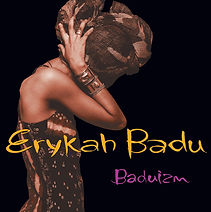
9/11/2024, Erykah Badu, Baduizm
This week’s feature is Baduizm. There has always been this sense of artistic sophistication that separates the greats from the greatest. It’s that sort of unspoken, reverent agreement between all music fans that sets aside certain artists in a category of musical and cultural transcendence. Bowie, Prince, Stevie, Biggy - all unanimously considered royalty amongst music people based on some set of criteria that, while it’s hardly defined, seems to be universally respected. Well I’m a music person and I’d like to take a stab at defining this higher artistic ground by way of an addition to that list. The name is Erykah Badu. One of the founding mothers of my very favorite genres, Badu’s iconic sound was born in 1997 in stride with the emerging neo soul movement. Fresh off a creative contact high from her time opening for and working with the equally genius D’Angelo, Badu released one of the greatest debut albums of all time, complete with a veteran-like understanding of the innerworkings of jazz, r&b, and everything in between as well as mainstream hip-hop level swagger and a not-so-subtle intellect. She was and is the complete package, and like those other sacred names, she displayed absolute command of that package. On Baduizm’s each and every track, you can find entertaining and witty, yet always genuine lyrics. You’ll get hooked on her ultra smooth jazz-forward instrumentation. Then she’ll grab your ear with intriguing and unorthodox, but never challenging vocal performances, and she won’t let that ear go until she gets her point across. She always gets her point across, but when you’re as sonically excellent, detail driven, improvisationally gifted, and unwaveringly confident as Erykah Badu, it’s not hard. So if you ask me, the thing that sets apart that highest tier of artists is a palpable mix of genius-level talent, complete artistic individuality, mastery over every step in their musical process, and the always underrated ability to learn. If you’d like to experience that level of excellence, listen to an artist who exists within it. Listen to Baduizm.
Enjoy!
.jpg)
9/3/2024, Greatest Hits, Al Green
This week’s feature is Al Green’s Greatest Hits. When Rolling Stone or any other publication releases an album ranking, the top 500 for example, you’ll often see a greatest hits album or several in the mix. Personally, I’ve never been sure if they intend to include a surely enjoyable option for casual readers and listeners, give props to an artist who they feel deserves inclusion despite lacking a worthy album, or if they genuinely consider them in the same category as an original record. Whatever the reasoning, I can’t get on board. Greatest hits records do not represent one continuous creative process, nor do they present the songs in the originally intended arrangement. Just like if you watch a sports highlight, you can grasp how incredible the athletic feat was in a vacuum, however watching the game live, not knowing what’s coming but understanding the gravity of the situation, you can experience the play at its best. Time for the exception. Al Green was a song maker. In the very grandest scheme of things, few were ever better than Al Green when it came to simply making songs. That’s because it's not simple, at least it shouldn’t be. I wouldn’t imagine it's easy to create the warmth and familiarity you can feel in every song of his while still painting a clear picture each time, from lost love to the search itself and everything in between. Green’s artistic focus was to actualize soul, as he understood it, on every track. As a result, nobody was better at exploring and communicating the experiences of our most human needs. You can hear Green’s soul live in perfectly curated succession on the 1975 Greatest Hits without any of the usual sins of a greatest hits album. Nothing is overplayed, nothing feels neglected, it’s simply a perfect slice of the soulfull treasure trove that is Al Green’s discography.
Enjoy!

8/28/2024, Sex Machine (Live), James Brown
This week’s feature is Sex Machine (Live). Don’t get too excited, it's just another album. What grabs my eye with that title isn’t available in the deepest corners of eBay, it’s the label “Live”. Live albums are a completely different ballgame than your classic LP. They come in all shapes, sizes, and levels of success because whether they’re a complete show, collection from a tour, or radio show, they represent a different phase of the artist's creative process. In fact it's between phases I find the most similarity in album styles because along with the album construction phase, live performances are the result of many repetitions, musical decisions, and curation dilemmas. Some are more capable in that later phase than others. James Brown was the very best. There’s something to be said about making music to be performed. Some don’t. Some focus on the light at the end of the tunnel that is the release, the payday. Other artists see what comes after the tunnel; they consider the music as it lives in the world. They aim to connect with the audience who will respond to their product and attempt to create something that would be best experienced when shared with that audience. James Brown was one of the greatest at delivering on that intention. Any one of his albums brought gobs of energy, ferocity, and versatility in both emotive and stylistic fashions. The same goes for his live shows. He was notorious, and for good reason as he’d dance, I mean dance covered in sweat across the stage singing, sometimes shouting, his heart out in front of bands and crowds of equal excellence. True to the vision, you can experience James Brown and The J.B.s performing hits and covers alike with complete mastery of the stage and their craft, in Augusta GA, 1969. If that sounds as perfect to you as it does to me, get your ears on some form of Sex Machine (Live) and avoid searching it on the internet, it’ll produce some mixed results.
Enjoy!

8/21/2024, Comfort Eagle, Cake
This week’s album is Comfort Eagle. There is something to be said about a perfect opening track. Tuning your ear to the sound of the record is so important, so key to your listening experience, that a good first song can make or break your first listen. A song that perfectly sets the tone can guide the listener into the record in a way no promotional gimmick ever could. Cake is a band that’s no stranger to gimmicks, although they prefer to inject theirs into the music itself. The Sacramento band found a funny little pocket of 90s rock and ran with it for two decades. Surging onto the scene in 1996 with their biggest hit “The Distance” (and a fun little cover of “I Will Survive”), their unique style gained immediate attention. That aforementioned style could certainly be considered an acquired taste, but no album is more encouraging of that acquisition than their 2001 Comfort Eagle. Why? Well for starters, the very first song. Track 1, “Opera Singer”, begins with the simple tapping of a drum, before layering in a guitar, bass guitar, and hand claps in pretty short order. The opening introduces the spacious sound that makes the band so appealing, and the horns that come spilling in just moments before the first verse introduce an element of formulaic unpredictability that gives the album its signature balance between fresh and familiar. From there, if you’ve bought in, you’ll be caught up in the easily experienced but casually relentless pace of Cake, as John McCrea bombards you with his oddly enjoyable performances of even odder lyrics. You’ll blink and suddenly you’ll be at the instrumental halfway point, as the first five of eleven songs are five of their strongest ever. That’s the value of a good start. So if you’re still reading, or better yet listening, tell me you’re not curious what you’ll find on the second half. You won’t be disappointed,
Enjoy!

8/14/2024, So (25th Anniversary Deluxe Edition), Peter Gabriel
This week’s album is So (25th Anniversary Deluxe Edition). If there are two things I don’t like in music it's the 80s and 25th anniversary deluxe editions. First, every decade has a very general musical aesthetic or sound that the majority of its artists exist within. To me, the 70s and 80s have two of the most potent impacts on the music made within them, to the point that if you align with said aesthetic and sound you’ll love the decade and if you don’t, well you know. There are roughly one bajillion fans of the 80s and everything that came with that decade, and I’m sure the same can be said about the 70s. I personally, for reasons I don’t have time to unpack, can’t stomach the former and can’t get enough of the later. Second, and more simply, I don’t like 25th anniversary deluxe editions because they provide an excess of music, stray from the originally intended product, and are a thinly veiled excuse to sell something that’s been out for 25 years. That being said, I’d also like to share one of my favorite phenomenon of musical consumption - when you listen to something you are fully prepared to not enjoy and then love it. It just makes it that much better. Now, after that spastic little intro, I give you So (25th Anniversary Deluxe Edition) by Peter Gabriel. After surging into the spotlight nearly a decade prior, Gabriel came back stronger than ever in 1986 with “Sledgehammer”. It was a complete switch up from his previous high water mark, “Solsbury Hill”. From happy nostalgia to a loud triumph, in the moment the change of pace allowed for the ultimate public reinvention, or at least reintroduction of himself, but in hindsight it stands as the foremost example of one of his greatest assets. Gabriel is a true creative, interested in constructing a world within his songs and accomplishing something with every second of every track. His albums are adventurous, and what they lack in cohesion they make up for in every other category. On any given track you can be blown away by the vulnerability of his externalized interior, challenged by the atmosphere that very few artists are versatile enough to create, or simply swept up in an incredibly entertaining song. He’s offered that experiential variety at every step of his career (including his 2023 release), but no other album, nor moment in time offers it to the extent of his 1986 record. He’s an artist in his creative prime, immune to expectations and categorizations, doing what he was made to do; and as much as I hate to admit it, one of the best parts is the extra two discs of live performances. The dramatic and well-thought-out performances along with raw organic instrumentals stand to show you just how good he really is while welcoming you into that sacred sweet-spot of the 1980s that is Peter Gabriel in 1986.
Enjoy!

8/7/2024, In Rainbows, Radiohead
This week’s album is In Rainbows. Listenability. More of my self-defined jargon? Yes, but it’s also one of the very most tangible factors in experiencing music. With that come different methodologies and philosophies, ie. mainstream artists often prioritize it above most other aspects of the musical equation, while more alternative artists often prioritize different aspects of their art to reach the desired product. Enter Radiohead. A band who clearly has the ability to make listenable and easily approachable music, take “Creep”, but often chooses to prioritize other strongsuits they consider more unique to their specific craft, take OK Computer. There’s a reason for that choice of course. Anyone who’s listened to their records from 1997 and 2000 (and has the acquired capacity to be amazed by them) can attest to their untouchable soundscapes. Anyone who appreciates a unique vocalist can experience, in awe, the performative chops of Thom Yorke. Anyone who’s ever had existential angst or any menagerie of unchecked emotion run rampant on their psyche can feel the residue of such feelings on those records. Yet, even as they convert raw human experiences into a sonic one through a simultaneously humble and bombastically quirky brand of psychedelic math rock, there’s a large number of people who just can’t listen to it. That’s because, simply put, those two records, which Radiohead’s biggest fans place at their personal pinnacles of sound, are not entirely listenable. They’re abrasive, challenging, and sometimes downright unpleasant, and that’s all part of the prime Radiohead experience. That is the experience that Thom Yorke came to prefer and aims to reproduce every time he steps into the studio. However, for some reason, in 2007, they made a record that bypassed those intentionally disconcerting aspects of their signature sound. I’d love to know why. I’d love to have been there when after a decade of pushing the boundaries of rock horizontally, they chose to realign with America’s collective sonic consciousness. I’d love to have been there when Thom Yorke decided to make a record that prioritized that one missing ingredient: listenability. If you’re still wondering why it intrigues me to a rhetorical extent, be my guest and queue up one of the most existentially emotional, widely approachable, sonically clean, creatively excellent, and simply put perfect rock albums of all time.
Enjoy!